



| Brand Name: | diamond fencing |
|---|---|
| Model Number: | 002 |
| Technique: | Woven |
| Wire Diameter: | 2.5 |
| Weave Style: | Plain Weave |
| Application: | Woven Wire Mesh |
| Type: | Chain Link Mesh |
| Material: | Galvanized Steel Wire |
| Place of Origin: | China (Mainland) |
| heights: | 3 ft, 3 ft 6 in, 4 ft, 5 ft, 6 ft, 7 ft, 8 ft, 10 ft, and 12 ft |
| wire diameter: | 2-4mm |
| mesh guages: | 9, 11, and 11.5 |
Quick Details
Specifications
Hot dipped galvanized wire chain link fence, PVC-coated wire chain link fence, Stainless steel wire chain link fence, Aluminium alloy wire chain linke fence
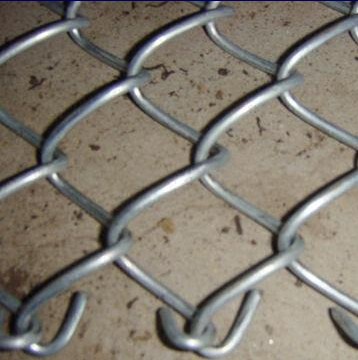
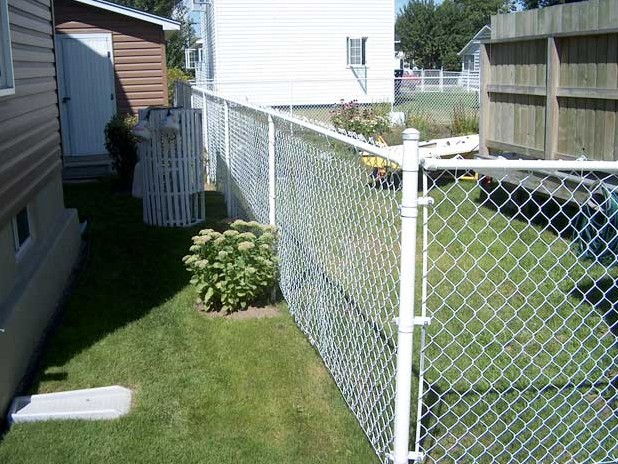
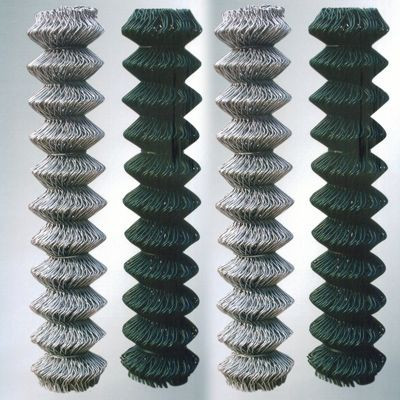
Material: low carbon, steel wire, stainless steel wire and PVC coated wire.
Aperture: 4.0mm-200mm
Wire Diameter: 0.5-5.0mm
Roll Size: Roll Width: 1m Roll Length: 1-50m
Surface Treatment: galvanized or pvc coated
Packing: on spool or in roll or as the requirements
Material: Low carbon steel wire.
Weaving: Woven diamond pattern provides strong, durable and flexible construction.
The manufacturing of chain-link fencing is called . A metal , often to reduce , is pulled along
a rotating long and flat , thus creating a somewhat flattened . The spiral continues to rotate past the blade and
winds its way through the previous spiral that is already part of the fence. When the spiral reaches the far end of the fence,
the spiral is cut near the blade. Next, the spiral is pressed flat and the entire fence is moved up, ready for the next cycle.
The end of every second spiral overlaps the end of every first spiral. The machine clamps both ends and gives them a few
twists. This makes the links permanent.
The manufacturing of chain-link fencing is called . A metal , often to reduce , is pulled along
a rotating long and flat , thus creating a somewhat flattened . The spiral continues to rotate past the blade and
winds its way through the previous spiral that is already part of the fence. When the spiral reaches the far end of the fence,
the spiral is cut near the blade. Next, the spiral is pressed flat and the entire fence is moved up, ready for the next cycle.
The end of every second spiral overlaps the end of every first spiral. The machine clamps both ends and gives them a few
twists. This makes the links permanent.
