



| Brand Name: | AiLF |
|---|---|
| Weight: | 0.38kg |
| Sampling Method: | Telemetry |
| Size: | 170x52x52mm |
| Alarm type: | Light |
| Place of Origin: | China (Mainland) |
| Name: | Remote Laser methane detector |
| Target Gas: | Methane(CH4) |
| Principle: | Laser Absorption Spectrum |
| Respond time: | 0.1s |
| Range: | 0~100,000ppm.m |
| Resolution: | 5ppm.m |
| Laser Class: | Class I Eye Safe |
| Protection level: | IP68 |
Quick Details
Specifications
L10 50m 100m 150m Handheld Remote Laser Methane Detector Natural Gas Leakage Detection
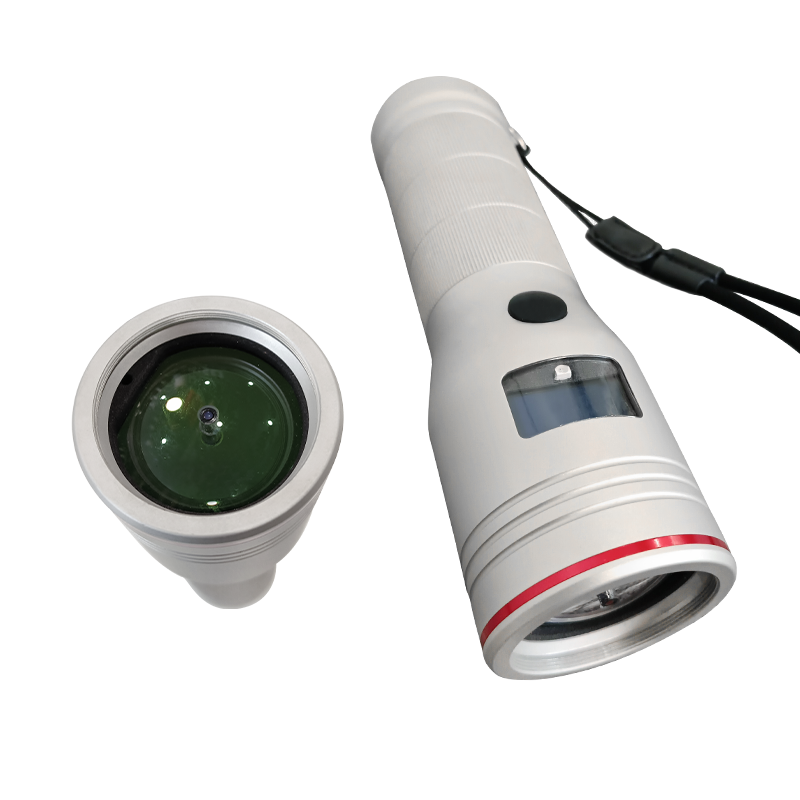
L Series Hand-Held Remote Laser Methane Detector.
Innovate the"flashlight" appearance design for easy holding and Longterm use, embody the design concept of A Reliable Tool in the Hand of Inspector, combining ergonomics and reliability.

Laser Absorption Spectroscopy (TDLAS):
the core of these systems is often TDLAS (Tunable Diode Laser Absorption Spectroscopy). this technology emits a laser beam and measures how much of the laser light is absorbed by methane molecules in the air.
the core of these systems is often TDLAS (Tunable Diode Laser Absorption Spectroscopy). this technology emits a laser beam and measures how much of the laser light is absorbed by methane molecules in the air.
Water and Dust Resistant, Grade
Available for explosive environment, Grade
Adaptable to various working conditions such as cities, wild
Field, stations and Pipelines with reliability, durability, safety and Stability.
| Model | L10 | L10M | Detection Subject | Methane(CH4) |
| Measuring Principle | Laser Absorption Spectrum | Detection Laser Class | Class I Eye Safe |
| Resolution | 5 ppmm | Indication Laser Class | Class IIIR No direct sight or instrument observation |
| Response Time | 0.1s | Enclosure Protection Class | IP68 |
| Maximum Detection Distance | 100m | 50m | Explosion-proof Grade | ATEX Exib IIC T4 GB |
| Concentration Range | 0~100,000 ppmm | Operatinging Temperature | -20 ~ 50 C |
| Power supply and endurance | Lithium battery > 10h | Operatinging Humidity | < 98%RH, no condensation |
| Main Unit Weight | 0.38kg | 0.36kg | Main Unit Dimension | 170 x 52 x 52 mm |
Application
Pipeline inspection
Natural gas leakage detection
Natural Gas Leak Detection:
Identifying leaks in pipelines, storage tanks, and other natural gas infrastructure.
Industrial Monitoring:
Detecting leaks in chemical plants, refineries, and other industrial facilities.
Environmental Monitoring:
Measuring ethane emissions from various sources, including landfills and agricultural activities.
Pipeline inspection
Natural gas leakage detection
Natural Gas Leak Detection:
Identifying leaks in pipelines, storage tanks, and other natural gas infrastructure.
Industrial Monitoring:
Detecting leaks in chemical plants, refineries, and other industrial facilities.
Environmental Monitoring:
Measuring ethane emissions from various sources, including landfills and agricultural activities.