



| Brand Name: | XINOCLER |
|---|---|
| Properties: | Test Kits |
| Feature: | Aflatoxin M1 Rapid Test Kit |
| Type: | Dariy Test Kit |
| Material: | Test Kit |
| Place of Origin: | China (Mainland) |
| Model Number: | 9761 |
| Specification: | 96 tests/kit |
Quick Details
Specifications
1. Overview
the product employs a competitive immunochromatographic assay for qualitative detection of aflatoxin M1 residues in samples. the principle involves antigen-coated test lines (T lines) on a nitrocellulose membrane and colloidal gold-labeled monoclonal antibodies. during testing:
Negative result: When no target toxin is present, colloidal gold particles bind to immobilized antigens on the T line during chromatographic migration, producing a visible colorimetric signal.
Positive result: If the target toxin is present, it competes with membrane-bound antigens for binding to gold-labeled antibodies, forming immune complexes. these complexes prevent T line coloration or reduce its intensity.
2. Normative References
GB 2761-2017 National Food Safety Standard Maximum Levels of Mycotoxins in Foods
QB RTK-2501 Quality Standard for Colloidal Gold Test Strips in Dairy Products
QB/I 6901 Xinocler Reader 2P Colloidal Gold Reader Operation Manual
RTK-976 Quality Standard for Aflatoxin M1 Detection Test Strips in Dairy Products
3. Terms and Definitions
Colloidal Gold Test Strip: A rapid diagnostic strip based on immunochromatography using colloidal gold-labeled antibodies.
Limit of Detection (LOD): Minimum target concentration reproducibly detectable by the test strip.
False Positive/Negative Rate: Consistency metric between test strip results and reference methods.
Intra-batch Variation (CV): Coefficient of variation for results within the same production batch.
Inter-batch Variation (CV): Coefficient of variation for results across different production batches.
4. LOD Standards (μg/kg)
Notes:
1. Whole milk powder must be reconstituted at 1:8 (w/v); LOD follows liquid milk criteria.
2. Matrices must meet fat (<4.5%) or protein (<3.8%) thresholds. Exceeding these requires validation per colloidal gold test strip protocols.
3. Validation testing is mandatory prior to the use of unvalidated matrices; otherwise, results are deemed invalid. Post-validation usage is permitted based on practical requirements, but such validation is not a mandatory prerequisite.
5. Operational Procedure
1. Pre-test: Equilibrate test strips and samples to room temperature (2025°C).
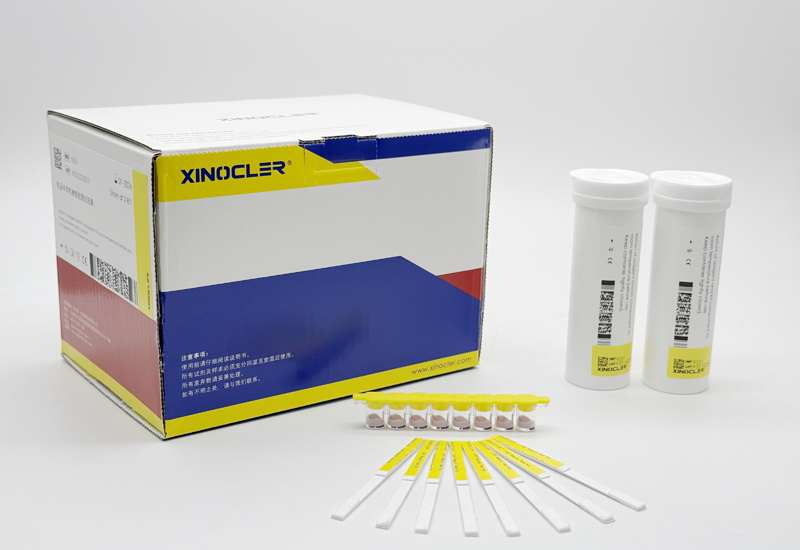
2. Setup: Remove required microplate wells and strips from the sealed container; use within 60 minutes.
3. Sample Loading: Pipette 200 μL of sample into the microplate well. Mix thoroughly by gentle aspiration.
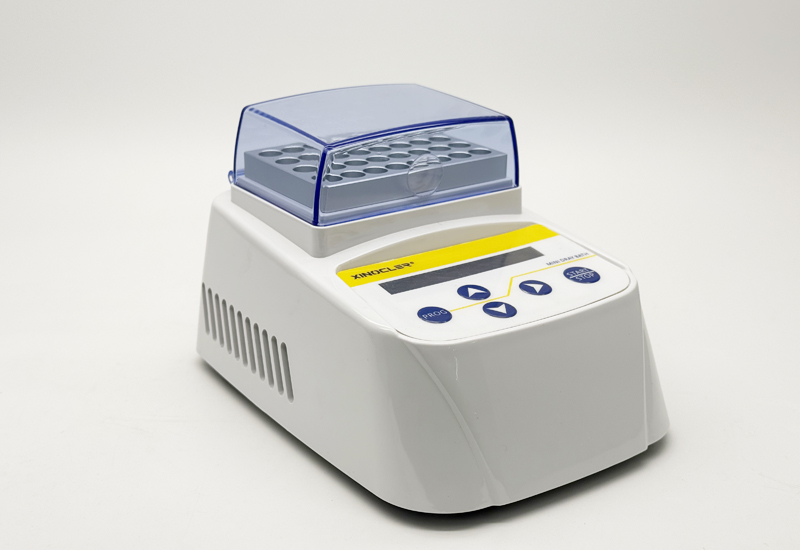
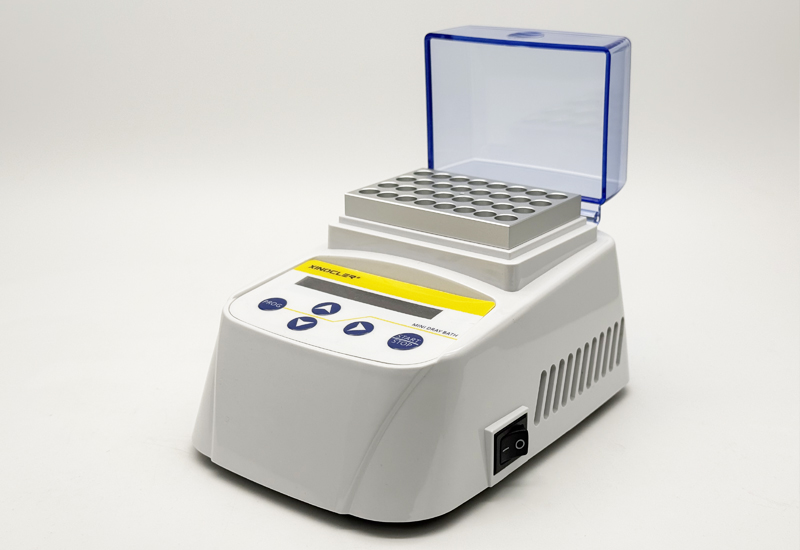
4. Incubation: Incubate at room temperature (2025°C) for 3 min. Insert the test strip into the well and incubate for another 3 min.
5. Interpretation: Read results within 30 sec post-incubation. Delayed readings are invalid.
the product employs a competitive immunochromatographic assay for qualitative detection of aflatoxin M1 residues in samples. the principle involves antigen-coated test lines (T lines) on a nitrocellulose membrane and colloidal gold-labeled monoclonal antibodies. during testing:
Negative result: When no target toxin is present, colloidal gold particles bind to immobilized antigens on the T line during chromatographic migration, producing a visible colorimetric signal.
Positive result: If the target toxin is present, it competes with membrane-bound antigens for binding to gold-labeled antibodies, forming immune complexes. these complexes prevent T line coloration or reduce its intensity.
2. Normative References
GB 2761-2017 National Food Safety Standard Maximum Levels of Mycotoxins in Foods
QB RTK-2501 Quality Standard for Colloidal Gold Test Strips in Dairy Products
QB/I 6901 Xinocler Reader 2P Colloidal Gold Reader Operation Manual
RTK-976 Quality Standard for Aflatoxin M1 Detection Test Strips in Dairy Products
3. Terms and Definitions
Colloidal Gold Test Strip: A rapid diagnostic strip based on immunochromatography using colloidal gold-labeled antibodies.
Limit of Detection (LOD): Minimum target concentration reproducibly detectable by the test strip.
False Positive/Negative Rate: Consistency metric between test strip results and reference methods.
Intra-batch Variation (CV): Coefficient of variation for results within the same production batch.
Inter-batch Variation (CV): Coefficient of variation for results across different production batches.
4. LOD Standards (μg/kg)
| Analyte | Position | Regulatory Limit (GB) | LOD |
| Aflatoxin | T | 0.5 | 0.2 |
Notes:
1. Whole milk powder must be reconstituted at 1:8 (w/v); LOD follows liquid milk criteria.
2. Matrices must meet fat (<4.5%) or protein (<3.8%) thresholds. Exceeding these requires validation per colloidal gold test strip protocols.
3. Validation testing is mandatory prior to the use of unvalidated matrices; otherwise, results are deemed invalid. Post-validation usage is permitted based on practical requirements, but such validation is not a mandatory prerequisite.
5. Operational Procedure
1. Pre-test: Equilibrate test strips and samples to room temperature (2025°C).
2. Setup: Remove required microplate wells and strips from the sealed container; use within 60 minutes.
3. Sample Loading: Pipette 200 μL of sample into the microplate well. Mix thoroughly by gentle aspiration.
4. Incubation: Incubate at room temperature (2025°C) for 3 min. Insert the test strip into the well and incubate for another 3 min.
5. Interpretation: Read results within 30 sec post-incubation. Delayed readings are invalid.